
The Hounsfield Problem: Why Dental Scans Break DICOM Viewers
 Marcus Foster
We were surprised that dentists were among the first people to sign up for KAYMO. We had never seen dental CT data and so these Cone Beam CTs rendered terribly. So we investigated.
How CT scanners create images
A CT scanner fires X-rays through the body and measures how much each ray is weakened — attenuated — by the tissue it passes through. Dense tissue like bone absorbs a lot of radiation. Soft tissue absorbs less. Air absorbs almost none.
By rotating the X-ray source around the patient and capturing thousands of these attenuation measurements from different angles, the scanner reconstructs a 3D grid of the body. Each cell in that grid is a voxel — the 3D equivalent of a pixel — and each voxel gets assigned a number representing the density of the tissue at that point.
The Hounsfield Unit
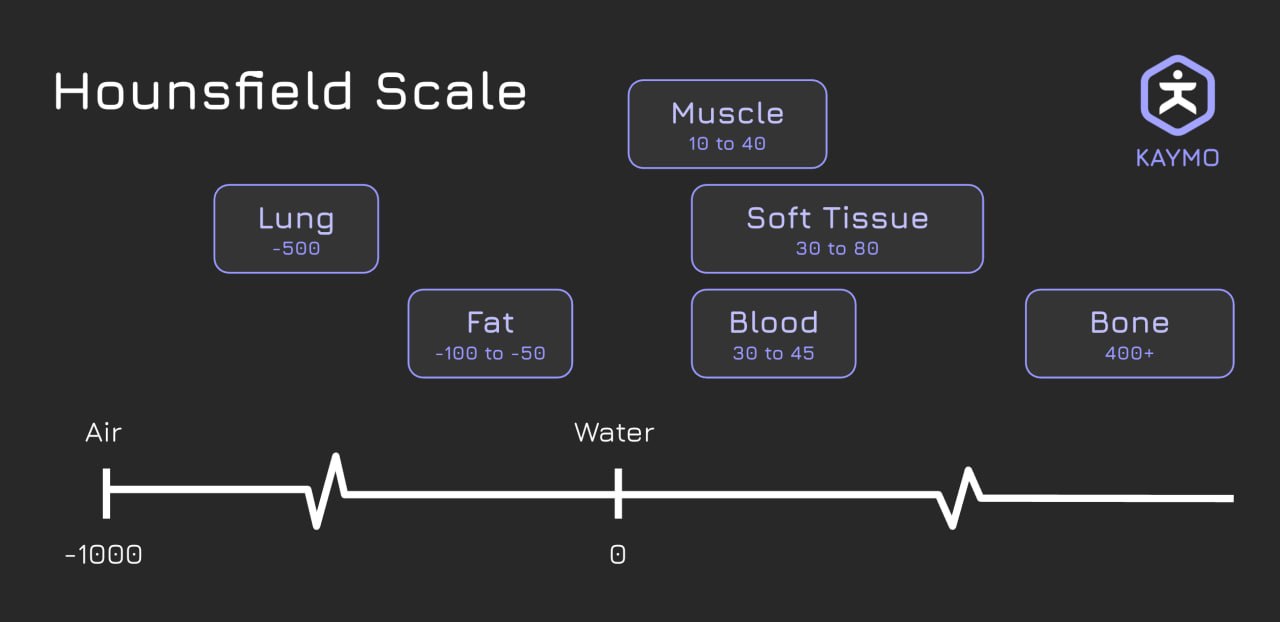
In 1971 Godfrey Hounsfield defined a universal scale for CT scans, anchored to the attenuation of water and air.
On the Hounsfield scale water is represented by 0 and air by -1000. All other tissues and materials have values relative to these universal elements. Every manufacturer calibrates their CT scanners to these Hounsfield Units. As a result, all CT scanners produce very similar data, which can be displayed and rendered by many different software applications.
Dental Cone Beam CT is different
While dental CBCT scanners measure the same physical property, X-ray attenuation, they are not calibrated to Hounsfield Units. Instead, every manufacturer uses their own range of numbers. These values reflect relative attenuation between different tissues, but without standardized anchor points.
Without this universal reference, there is no interoperability.
Why CBCT doesn't calibrate to Hounsfield
CBCT uses a cone-shaped beam that captures the entire volume in one rotation, versus the thin fan beam of medical CT that acquires slice by slice. The cone beam is faster and exposes patients to less radiation. But the wide beam geometry introduces scatter radiation artifacts that make accurate HU calibration difficult. Presumably CBCT manufacturers decided it was not worth the engineering effort to solve this.
Notably, this situation effectively locks dental practices into the manufacturer's software ecosystem.
Our solution: Adaptive rendering
KAYMO is on a mission to make medical imaging accessible and useful for patients, and we feel that dental scans should be part of this.
Creating appealing 3D views of dental scans required a few modifications to our analysis pipeline and rendering approach.
First, we needed to detect CBCT scans when users upload them. The only way to do this reliably is to analyze the actual voxel data rather than rely solely on DICOM headers.
Due to the high resolution, dental volumes can be very large, challenging even the fastest computers and internet connections. We generate downsampled preview volumes for large scans to improve the experience for our users, while loading the full resolution scan in the background. This also improves the KAYMO experience on mobile devices.
Without Hounsfield Units, all our standard transfer functions, which assign colors and transparency based on voxel values, became useless. We solved this by performing an iterative histogram analysis for CBCT scans in order to identify natural density clusters, and applying dynamically generated transfer functions.
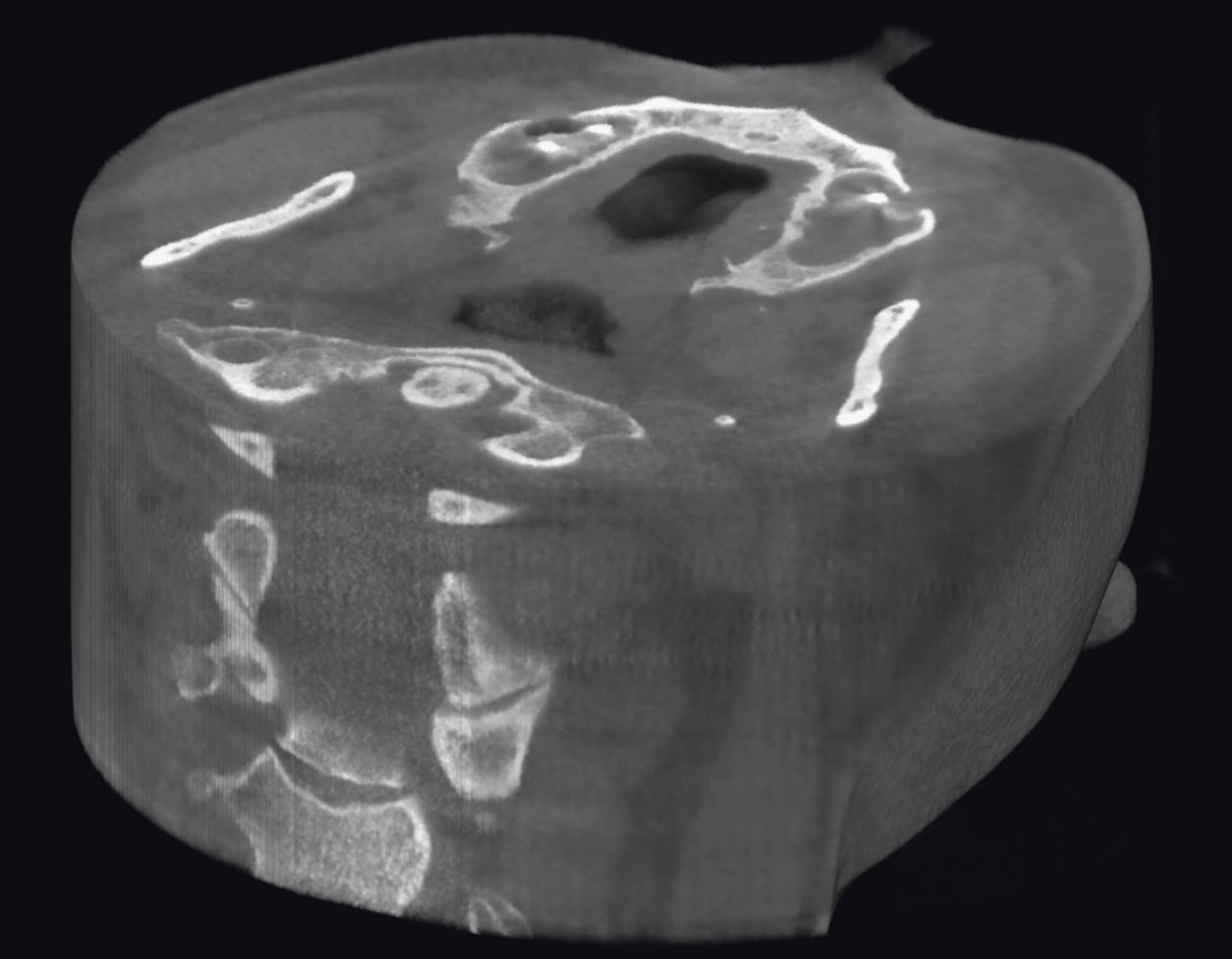
CBCT with standard colormap
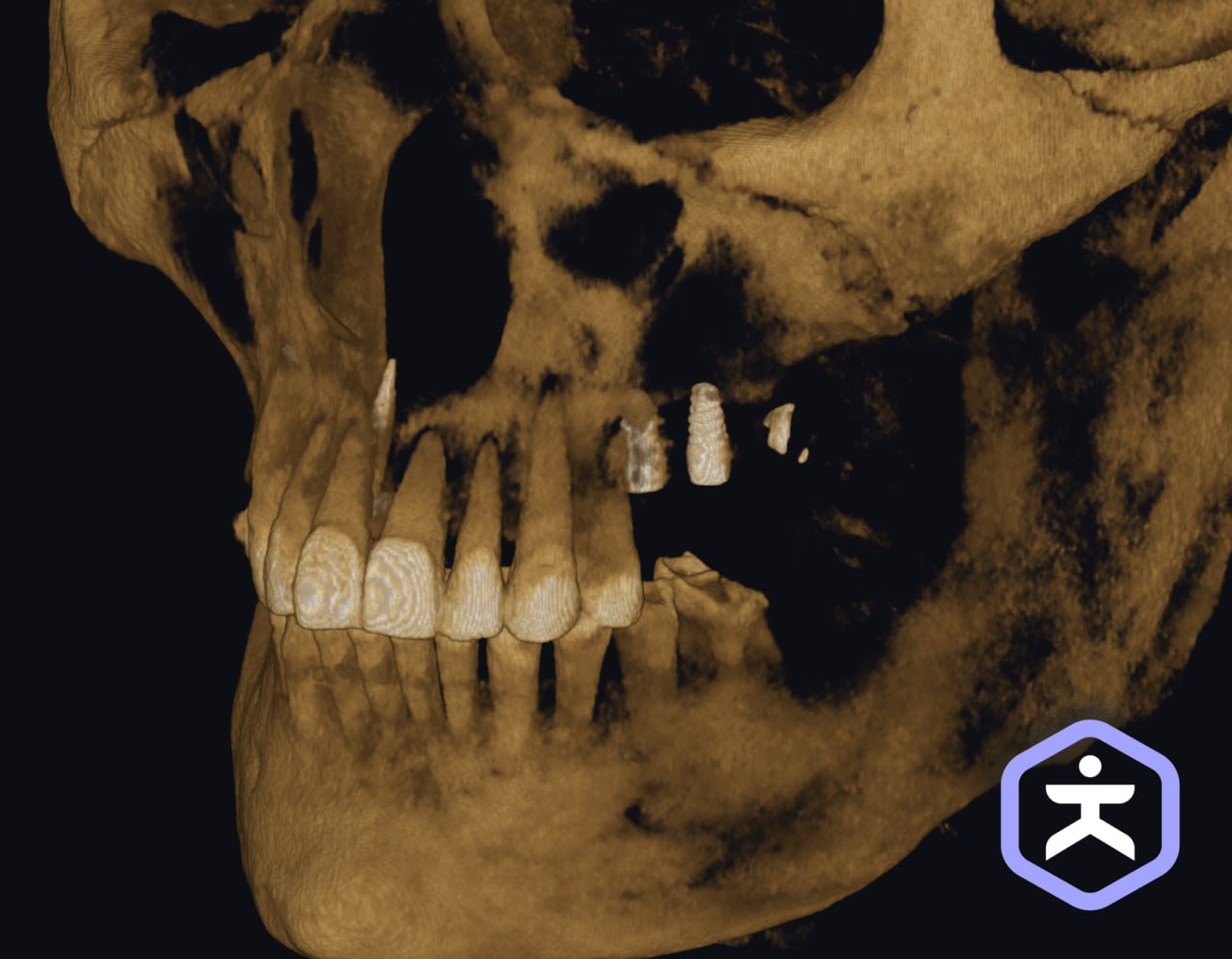
KAYMO dynamic transfer function
Patients should expect more
Millions of patients have CBCT scans every year, but until now had no easy way to view their images. KAYMO now gives every patient the ability to view and understand their dental scans. We believe that understanding increases patient engagement, and improves long term health outcomes. We are here to help.
Take control of your medical images
Kaymo makes it easy to upload, manage, and visualize your CT and MRI scans from any device.
Get started